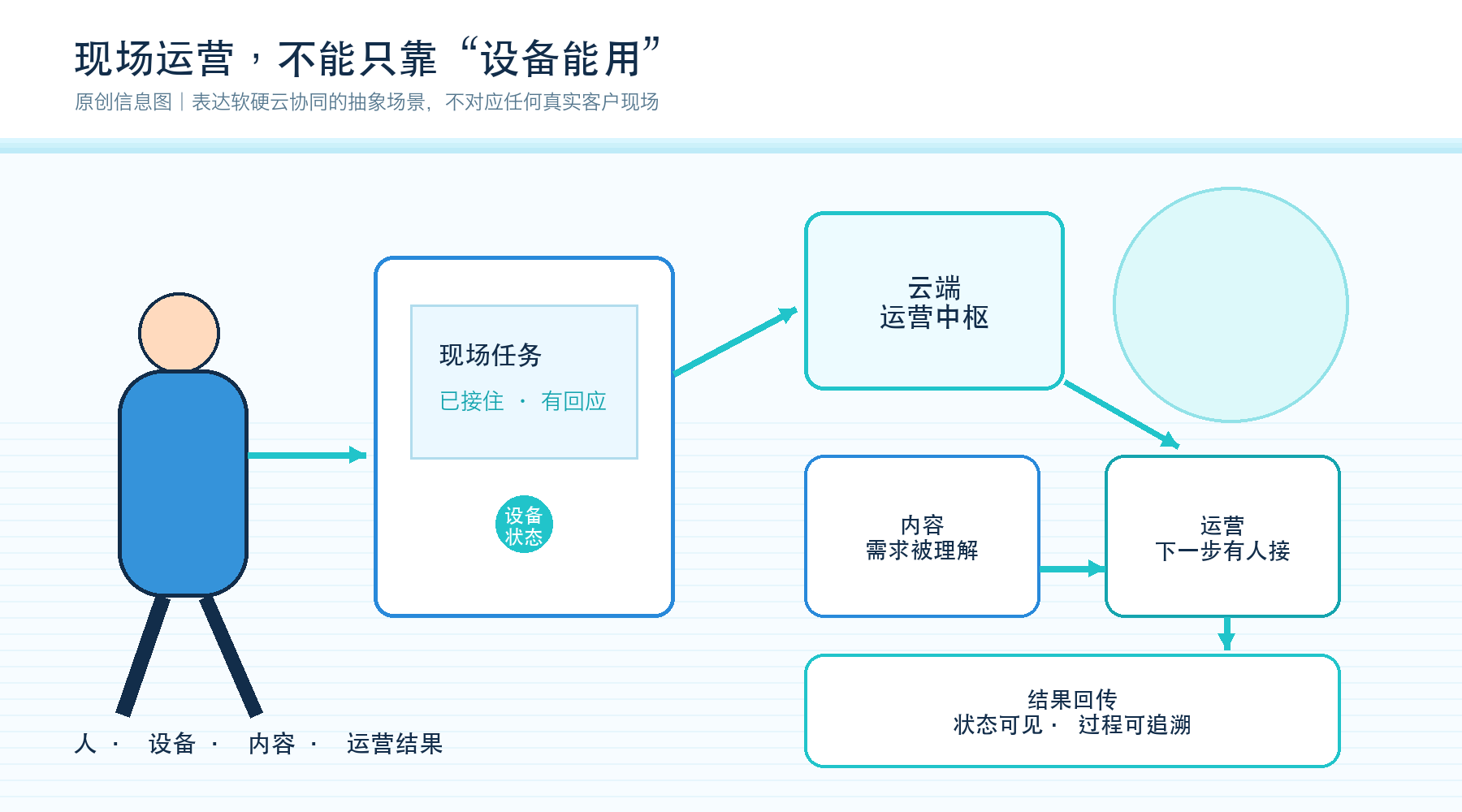
The hardest part is when work loses its response
A worker arrives, requests permission, waits for approval, opens a lock and retrieves an item. The urgent questions are simple: did authorization take effect, did the lock open, and was the action recorded?
In another scene, a user scans a code and sees a processing message. Was the order received? Who handles the service? What happens when the device fails? An AI device also needs more than a sent task: the field needs a receipt and a clear next step.
Customers buy a path from action to outcome
It receives commands, reports state and leaves a record so device changes are visible.
It joins requests, actions, device responses and follow-up handling.
It gives handover, review and the next improvement a reliable basis.
Hardware, software and cloud work around one concrete job to remove field breaks.
Four visible questions: who acts, how does the device respond, who handles the next step, and does the outcome return?
Workers need to know what to request and where to act. Users need to know whether someone received the scan. Device users need to know whether their request was understood. Operators need to see where work stopped and who should take the next step.
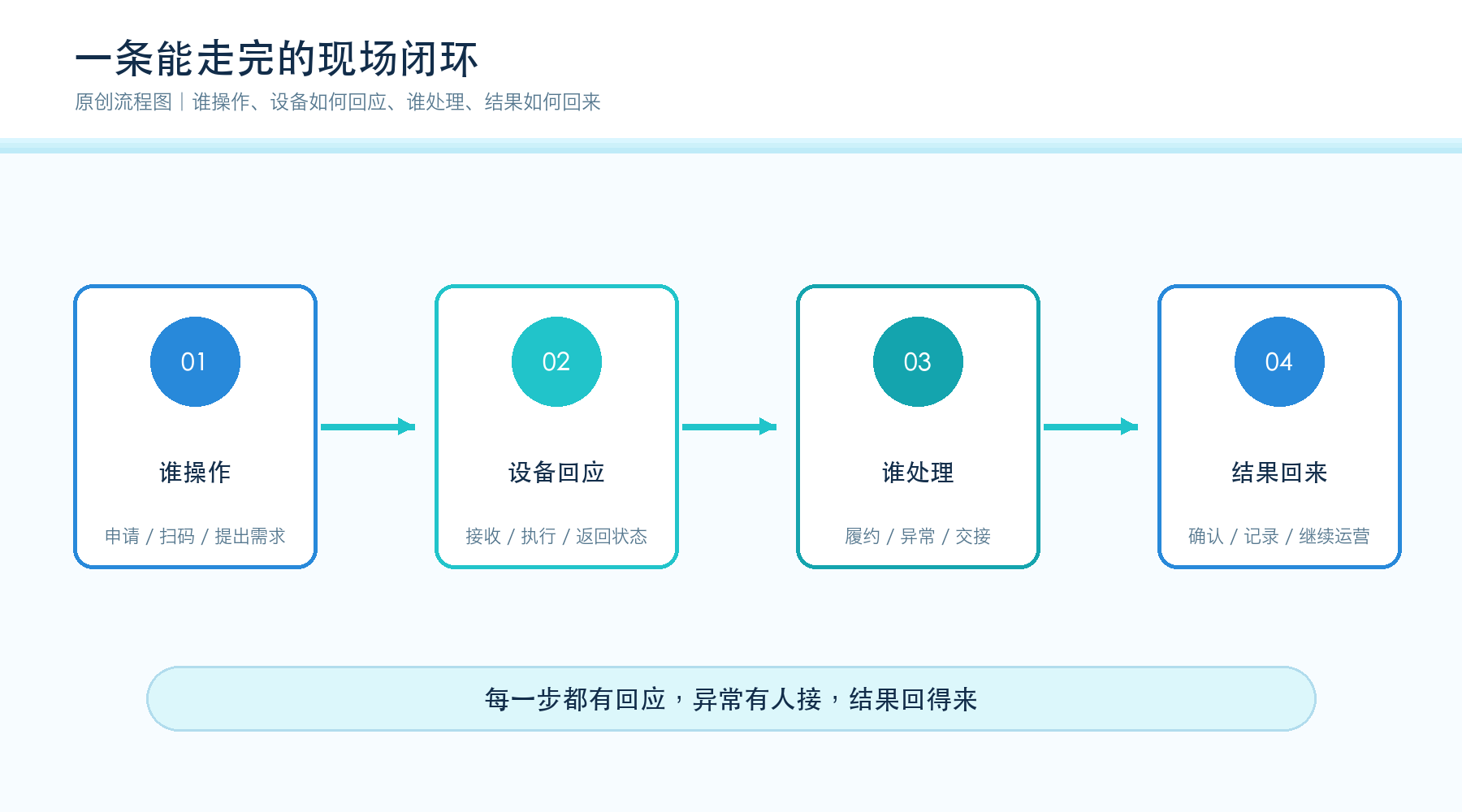
Figure 2 | Original process infographic showing an anonymized capability model, not a specific project backend flow.
The test is straightforward: did the device respond to a human action, did the system record the device change, and does an exception have an owner?
Five links from a field touchpoint to continuing operations
Field work changes people, shifts and locations. Networks become unstable, devices fail and tasks are handed over. A system that runs only in perfect conditions simply returns the pressure to people.
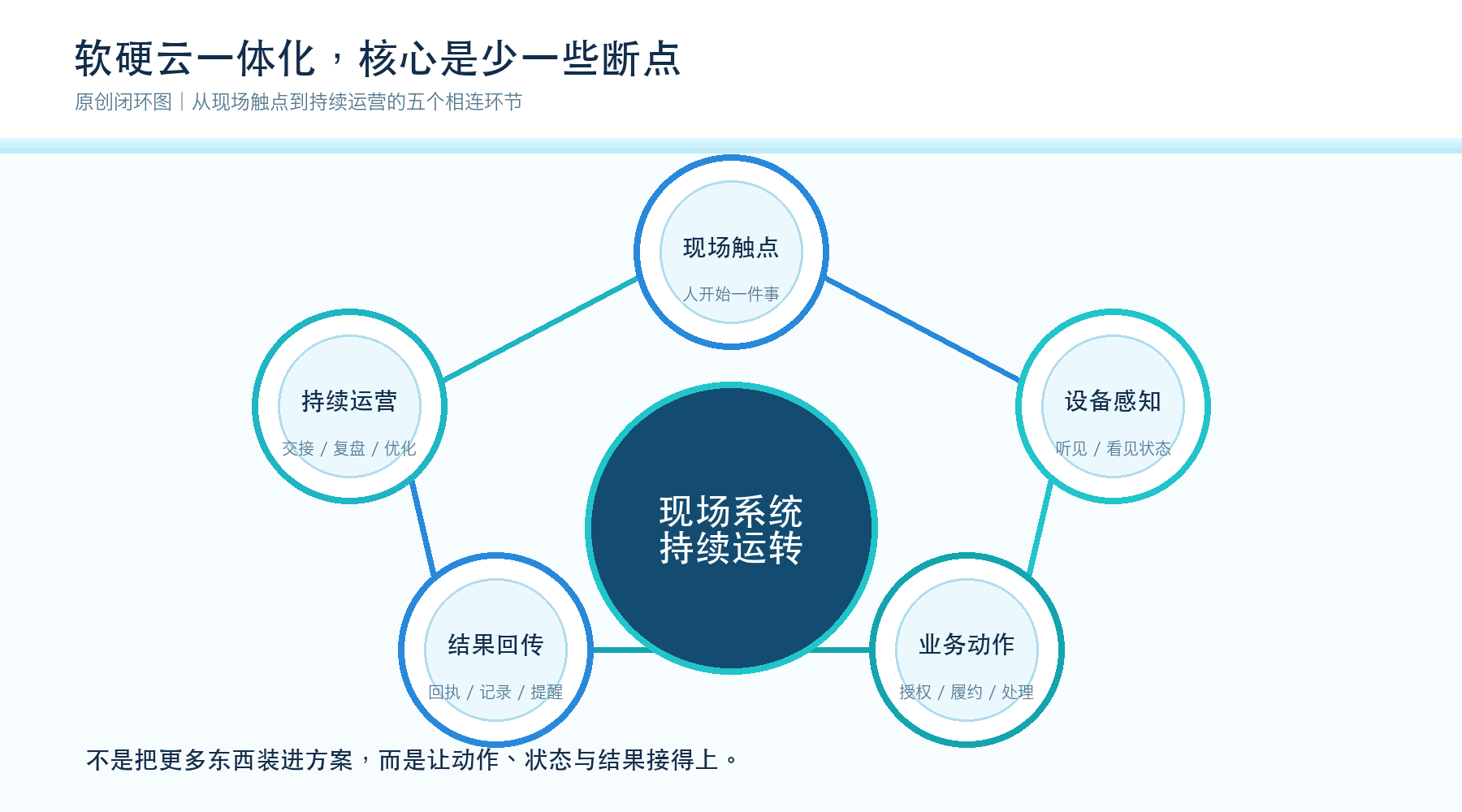
Figure 3 | Original five-ring infographic showing continuity from field work to operations; it contains no unverified performance, quantity or customer promise.
Keep real evidence and illustrative material in their proper place
Original infographics explain a method; they are not customer scenes. Existing static material may be a slice of project documentation, but it is not a live run, a current demonstration or proof of an outcome.
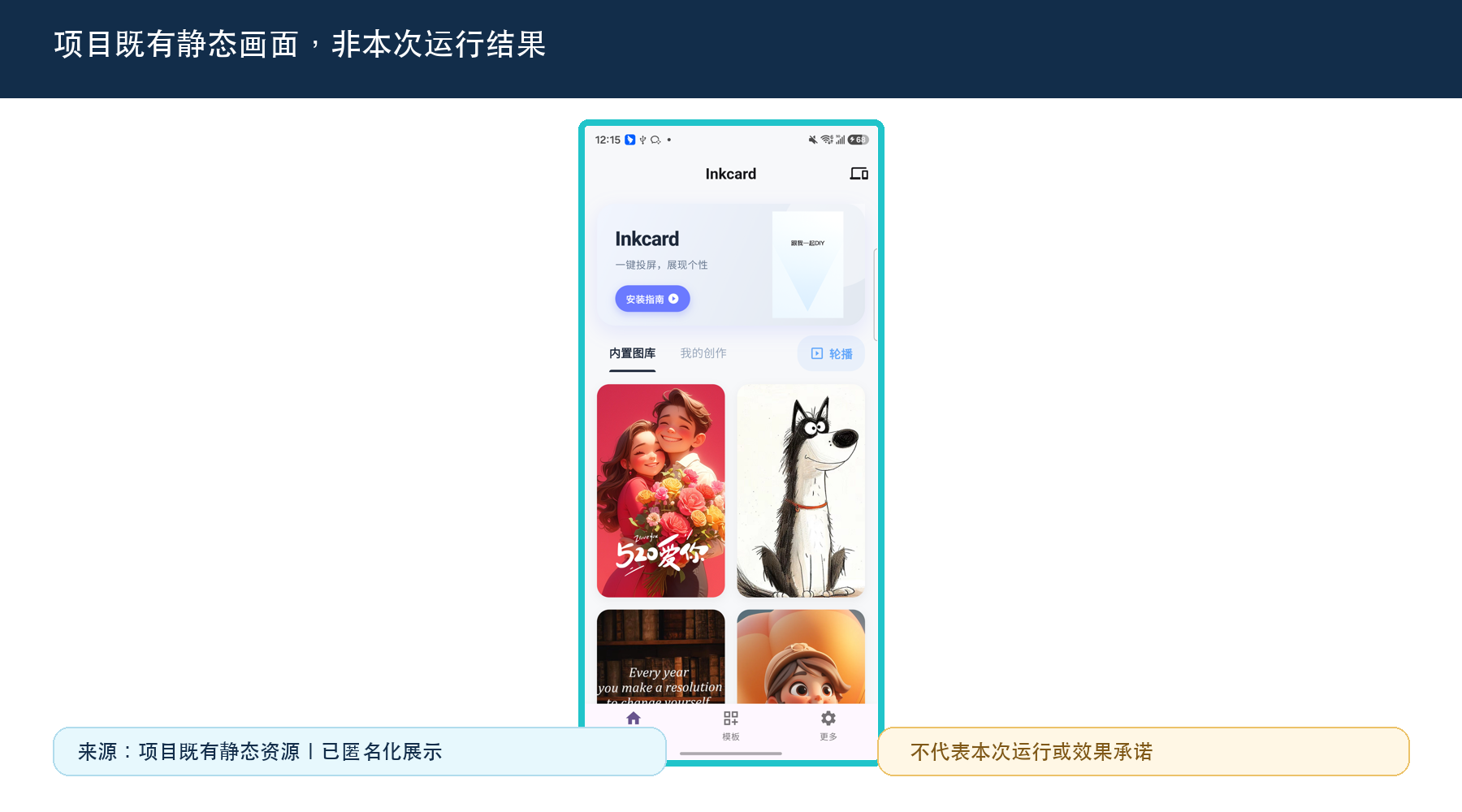
Figure 4 | Existing project static screen, not the result of this run; an approved static resource shown with anonymization.
This article discusses capability paths without inventing customer names, order counts, service times or failure rates. A real project still requires field research, authorized material and auditable records.
From “it works” to “someone has it covered”
Customers need a field system that keeps running through daily disorder. It responds clearly, records what matters and routes the next action to the right person.
Frequently asked questions
Does integration mean putting more features into one package?
No. It means connecting actions, device responses, exception handling and outcome return around a real field job.
Where do the four questions apply?
They apply to locks, shared operations, AI devices that handle tasks and intelligent control. The exact boundary must still be confirmed in the field.
How can a field system be checked for operational readiness?
Review authorization material, device state, action records, exception paths and outcome return. A single demonstration or static screen is not a substitute for verification.
Bring the real field situation
If you have a lock, a shared operation, a task-capable device or a group of facilities to control, start by making four things clear: who acts, how the device responds, who handles the next step, and whether the outcome returns.
Talk to LM