Identify the device and service
Identify the device, available services and current business entry from the scan, reducing page hopping.
LM connects the mini program, business services, device control and operations console into a traceable chain from scanning into a service through device execution, order settlement and revenue records.
This page presents confirmed product capabilities only; it does not disclose customer, device, deployment or transaction details.
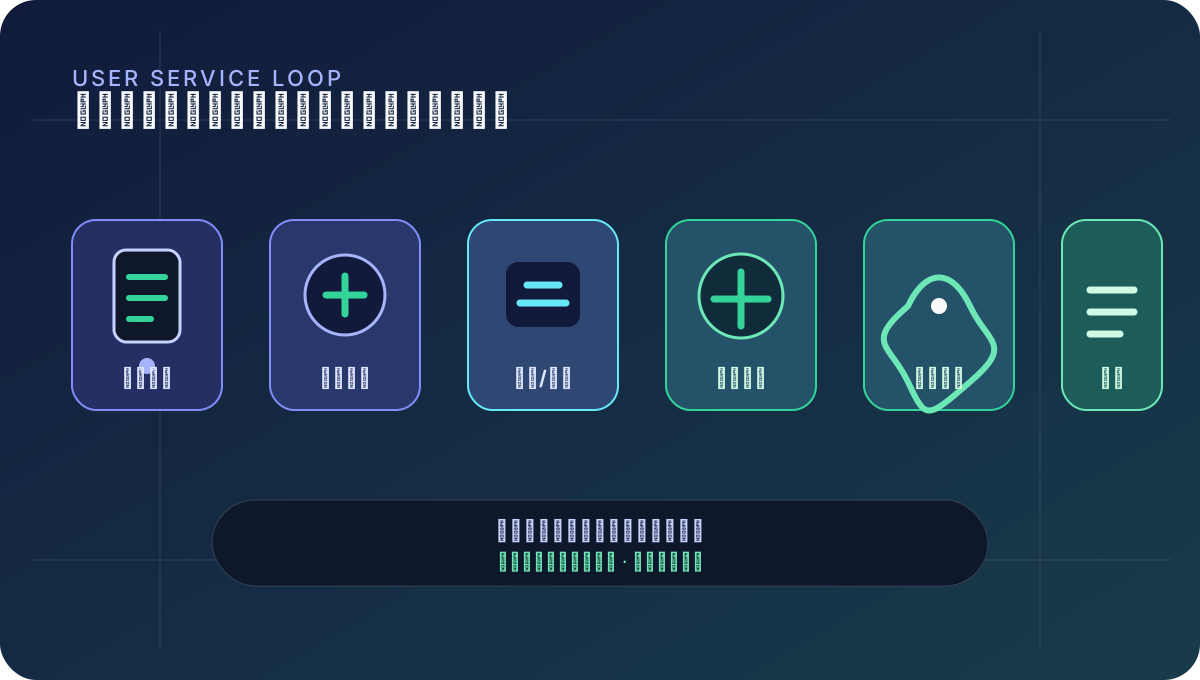
User loop · Abstract business illustration
After a user scans a device QR code in a mini program, the system identifies the device and available services, then supports one-off service, package entitlement or membership-card choices. After payment or entitlement redemption, the interface moves through device start and in-use states while order details, remaining entitlements and settlement results return to the user.
Identify the device, available services and current business entry from the scan, reducing page hopping.
Support one-off services, package entitlements and membership cards while routing the result into one order flow.
Device start, usage state, order settlement and entitlement records form one connected user experience.
Device execution does not become a black box after payment. The platform supports remote start/stop, device-state acknowledgements and online-state management, while retaining a near-field Bluetooth path for different network conditions and on-site operating environments.
Device execution and state acknowledgement in one service flow
Mini-program services handle user identity, device identification, payment callbacks, orders, refunds, package entitlements, membership cards, rentals and device-control APIs. Orders connect payment results, entitlement deductions, device execution and state changes so different charging and entitlement scenarios can evolve on one foundation.
Associate the user, device and available business at the service entry point.
Keep payment callbacks, order state, refunds and device execution in one business context.
Combine package, card, entitlement and rental rules as needed without rebuilding the user entry point.
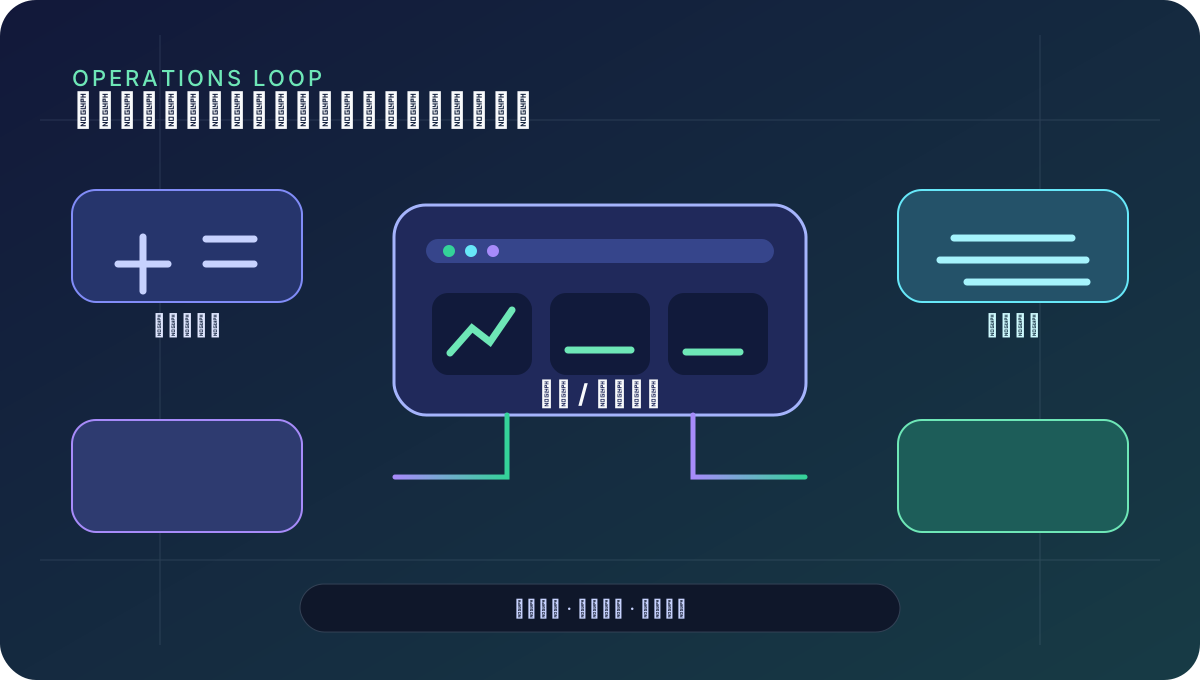
Operations loop · Abstract business illustration
The administration platform provides operations for devices, locations, orders, payments, refunds, users, cards, entitlements, rentals, feedback and statistics, with role permissions for different day-to-day responsibilities.
In a shared-service business, an order ending is not the end of the business process. The platform can generate revenue-allocation details by organisation and business rules and record processing states for console queries and reconciliation. The point is not to promise one fixed model, but to connect “rules — orders — revenue records” so operators can configure and audit their own model.
Apply revenue-allocation logic by organisation and business rules while preserving business boundaries.
Generate corresponding details and processing states for console queries and reconciliation.
Create an auditable operations basis from rules to orders to revenue records.
If you are planning shared health devices or another shared-service device and want to connect the device, cloud, mini program and operations console into one business loop, contact LM through the website or WeCom to discuss the scenario and goals. After understanding the requirements, we can map a reusable implementation path together.
Discuss a solution